Showing posts with label Item of the week. Show all posts

Friday, April 15, 2011

Item of the Week: "Loose Change" by Suzanne Opton

Opton's photographs portray aging women in a positive light.

New to the Chrysler this week is photographer Suzanne Opton’s book “Loose Change.” It showcases photos from her 2001 exhibition by the same name. All the pieces feature middle aged women posing nude with household items.


Opton, perhaps best known for her “Soldier” portraits, ensures her subject’s anonymity by focusing solely on the body. She stresses her feminist perspective by pairing the women with sponges and toasters, commenting on society’s expectations of women. Many of the women also pose with vases, traditional symbols of femininity.

Few artists have dealt with the aging body with such a positive perspective. Rodin famously portrayed an aging courtesan that had once been beautiful in his sculpture “The Kiss.” In response, Erwin Blumenfeld photographed the model for “The Kiss” as an old woman defeated by her body. Only in recent years have artists like Anne Noggle and Joyce Tennyson portrayed the aging body in a positive light.

The book includes interviews with the models, which provide fascinating insight into the way women see themselves.

“What struck me was the universality of the photos, of the bodies,” says one of the anonymous models. “It felt like we all look like that: we bulge a little here, we sag a little there, and there’s beauty, too. That was nice, seeing that realized as art.”

“Loose change is what’s left over at the end of the day,” author Vicki Goldberg writes in the afterword. “It makes a pretty jingle but hasn’t much power and doesn’t go far.” The women featured, she points out, are so much more.

Ultimately, the project celebrates the beauty of all women, regardless of their age or shape.

Want to learn more about Suzanne Opton’s work? Two of her “Soldier” portraits are included in our collection at the Chrysler, or visit her website for more information.

Friday, March 11, 2011

On View in the Library: John Taylor Arms: Tells How He Makes an Etching


Have you visited the exhibition An Eye for Architecture: The Etchings of John Taylor Arms currently on view in the Kaufman Theatre Lobby?

We've had a lot of visitors to the Library lately who are interested in learning more about printmaker John Taylor Arms and his work. While looking for more information about Arms' process we stumbled on a wonderful series of articles by him that ran in American Artist magazine in 1940-1941. Entitled "John Taylor Arms Tells How He Makes An Etching", the three part series walks the reader through entire process of making an etching in  Arms words. Illustrated with photographs of the artist at work, this is a great way to learn more about how he approached printmaking.  If you'd like to take a look, the whole series is on view in the Library reading room.  The exhibition An Eye for Architecture will be on view in the Kaufmann Theatre Lobby through July 24, 2011.
 

Friday, February 18, 2011

A Life Devoted to Better Glass

Here at the Jean Outland Chrysler Library, we spend a lot of time adding to our vast store of information by filtering newspaper clippings, gallery mailings, etc. into our artist files. Occasionally, we run across a wonderful surprise. While sorting a box of what we thought was artist information to be added to our vertical files, we ran across the history of a company, a career and a passion for better glass.


Edgar Bostock was apprenticed to the window glass trade by his father, Edward Bostock on October 14, 1890 through the offices of the Window Glass Workers Association. He was apprenticed for the designated period of 3 years. The files contain Bostock’s workers’ account book beginning date November 11, 1893, his Glass Workers Association due book – both of which any glass worker would have had – as well as a World Glass Workers Association Delegate pin. Correspondence, photographs and a beautifully-colored trade catalogue from the plate and decorative glass company that Bostock would later found called Bostock, Rhoades & Co., though undated, give us a glimpse of how far Mr. Bostock came in his career.

The files are based on Mr. Bostock’s professional life and also contain letters, chemical formulas, articles and hand-written notes pertaining to the chemistry of glass. Perhaps the jewel in the crown of this find are the writings of Edgar Bostock - handwritten and typed - including professional journal articles, speeches, and the manuscript for a book regarding the history of glass and other glass-related subjects. The articles and manuscripts were found bound with heavy twine and the pages are carefully numbered and revisions are included as if the author were preparing for careful professional editing and publication. Bostock’s chief concern appears to be maximizing the chemical composition and shape of glass for maximum lighting capabilities, though his company also made colored decorative glass, which accounts for the deep chemical interest in tinted glass. The bulk of the materials contained in these files appear to be from the nineteen-teens and twenties, and other than Bostock’s Union paperwork and wage books, there is no account of his early career.

Please keep an eye on our blog for more surprising finds!

- SMR

Friday, January 21, 2011

Top Shelf Books From the Age of Queen Victoria - Last Week

This Fall we've enjoyed showing off some of the Jean Outland Chrysler Library collection's 19th Century books along the top shelves of the reading room.  Our Fall intern Whitney Frazier selected one of the books on display to write about for the blog. You can read about her selection below, but if you'd like to see the books for yourself, stop by the Library before they return to the stacks on January 28, 2011.


Caricature and Other Comic Art

In the Reading Room of the Jean Outland Chrysler Library, lining the top of the shelves is a collection of Victorian books. After looking into each of the interesting collection, I chose Caricature and Other Comic Art by James Parton. This book was published in 1878 by Harper & Brothers, Publishers. This publishing company is now known as HarperCollins. On the cover is a comic called Pigmy Pugilists—from Pompeii. It shows two men one on the ground reaching for help while the other is still ready to fight. This book offers a range of caricatures from the Romans through America 1875. The author, James Parton was a well known biographer, writer and historian of his time. His books were widely published and admired of his time. He was author of many presidents’ biographies, among other historical topics. This book is an interesting composition of cartoons poking fun at everything and everyone who was a popular topic at the time. The book explores political, religious, literary, social, and economic avenues. Caricature and Other Comic Art is greatly interesting as a social view of the times and what was historically critical at the time. I enjoyed reading into the Reformation and Roman and Greek historical caricatures and how they applied socially. This book is a fascinating resource into social and historical values.

 - Whitney Frazier, Library Intern Fall 2010

Friday, December 3, 2010

Marley was dead, to begin with…

What better on a cold evening than to curl up with a classic tale of mystery and horror? Even the most cheerful holiday songs tell us “There’ll be scary ghost stories and tales of the glories…” Spooky tales by the fire have been a winter’s tradition for time in memoriam, beginning as a Pagan tradition.  Over the centuries, the tradition has continued in many manifestations. Dickens visited upon Ebenezer Scrooge three spirits, the ghost of Hamlet’s father haunted the ramparts during Christmastide, J.M. Barrie and Robert Louis Stevenson both spun ghostly winter yarns, and Poe – of course – sat his lonely characters before the fire on a midnight dreary. To continue this haunting tradition and as a nod to the on-going London Calling: Victorian Paintings from the Royal Holloway Collection, the Art/Books, Wine/Cheese Book Club will be reading the spine-tingling classic A House to Let by Charles Dickens, Wilkie Collins, Elizabeth Gaskell and Adelaide Anne Procter. Please join us on Wednesday December 15 at 6:30pm to discuss the novella. Busy that evening? Drop by the Jean Outland Chrysler Library Wednesday through Friday and leaf through favorite tales –scary and otherwise – by Charles Dickens, J. M. Barrie, Robert Louis Stevenson, William Shakespeare, Edgar Allan Poe, Nathanial Hawthorne and many more. Happy reading!

- SMR

Thursday, November 4, 2010

Is there a Detective in the House?

Do you love a puzzle? The people in the Victorian era – both in England the United States certainly did. While preparing for the London Calling exhibition we came across three Victorian era puzzles that have us scratching our heads. Are you as clever as 19th century readers? Give these three a try:

A rebus is a word puzzle with where pictures and symbols are used to represent words or parts of words to spell out a message. In the 19th Century they often appeared in monthly magazines - with the answer in the next month’s edition. We imagine this particularly difficult (at least to us!) rebus from the December 1879 issue of Demorest’s Magazine encourages more than a few readers to order the next issue:


Click on the image for a closer view.

Victorian Ladies were also fond of a good puzzle. This riddle in the form of a poem was intended to entertain ladies while also helping them to learn the name and meaning of various types of flowers – can you name the blooms in the" Enigmatical Bouquet" from the Lady’s Almanac 1855?

Click on the image for a closer look!


Finally, this last item offers a puzzle on more than one level. Found in the archives of the Norfolk Museum, this pamphlet appears to be the catalog of an art exhibition held in Norfolk in 1887 on Granby St. . A closer look at the artists who created these works of art raises a few questions.


Click on the image for a closer look!


Unfortunately, this last puzzle remains unsolved – but who knows, perhaps with a little research you can be the one to discover the truth behind these less than believable nom de guerres.

All three of these puzzling items can be found in the Library….


Friday, October 29, 2010

Archives Month - A Bump on the Head


Pirates and phrenology? Yes. That’s right. In 1827 John Myers, who was Inspector of Customs for Norfolk at the time, received an odd question about the skull of a pirate from his friend Joshua Cohen. Apparently there was a desire for the skull for “phrenological appreciation at Baltimore” by a Dr. Archer. Did Dr. Archer wish to derive meaning from bumps on the bones of the Pirate Tardy? Popular science at the time postulated a relationship between a person’s character and the morphology or shape of the human skull. This study became all the rage, and was used in society at the time to explain misfortunes, predict the future, diagnose maladies, etc. Dr. Archer probably would have wanted to inspect the skull of a pirate in order to determine the malformation that sparked his life of crime.

It was the job of John Myers to say whether or not it was in his jurisdiction to allow this piece of a pirate, buried in the sand at Old Point, to leave the state of Virginia. We’ve had some challenging research questions here at the Jean Outland Chrysler library, but we’re willing to bet that this one had John scratching his own noggin. Interest in the human head has waned little in the last almost two centuries. The use of the skull in art has sky rocketed in the last few years – think of Damien Hirst’s diamond encrusted skull. Do you have a mind for some phrenological explorations of your own? Stop by the JOCL this Fall and glance through such popular titles as Wonder and Horror of the Human Head and Ghost in the Shell. We also have a copy of George Combe’s The Constitution of a Man - one of the most popular works on phrenology.
Just thought we’d give you a heads up.

- SCM
Here's the original 1827 letter from the Myers Collection. Click on the Image for a better view!

Friday, September 3, 2010

Item of the week: the September 3 storm

John Myers Sept. 4, 1821 letter to his brother Sam
It looks like Hurricane Earl has blown by Norfolk, luckily without much damage. The round the clock coverage of approaching storms we enjoy today gives us ample time to prepare for storms – a luxury previous generations of Norfolk residents didn’t have. A pair of letters from the Myers Family papers reveal the surprise and terror they felt in the wake of devastating weather. On September 3, 1821 a powerful storm, probably a Category 2 or 3 hurricane on today’s Saffir – Simpson scale hit Hampton Roads. On September 4 John Myers wrote his brother Samuel Myers in Richmond:


We have an awful tempest – the damage done is great – the extent not ascertained – sufferers many – some severe – the papers give you a hazy & imperfect sketch. It is a scene that could not be described without detailing a thousand minutia - you must see it to believe – we have not a tree, shrub or fence standing ... I do not know what is the loss in expense to the Richmond Boats – They are both high and dry in a cornfield, about ten miles above the eastern Sandbridge – when & how to be got off I know not.”

On September 5, John wrote again in greater detail, adding:

Our dwelling stands & all are safe & well within – but every tree & fence & shrub around are leveled – Our drawbridge struck ground & the Lothair (a ship) is in a cornfield not to be gotten off … I would not repair the damage to the town for 200 million dollars - it is a scene of devastation – Chamberlain is a considerable sufferer – His brig sunk – I must refer you more particularly to the papers – The Richmond & Petersburg are in a cornfield ten miles above the Eastern Bridge, how and when to be got off is conjecture – heavy expense at least. Disease & death , which surround us, has no terror like the fury of the tempest...”

The Hurricane, which went on to be the last Hurricane to directly strike New York City continued up the coast, leaving destruction in its wake. Disease often followed a storm, and in 1821 Norfolk was struck by a yellow fever epidemic which increased the toll on the  already suffering city.

If you’d like to learn more about the Myers family, stop by the Library or visit the Moses Myers House.

Friday, July 2, 2010

Music to Our Ears - Myers Music CD Release

The Jean Outland Chrysler Library is very proud to announce the release of Music of Quality and Taste: Selections from the Myers Music Collection. This is the first CD produced using music from the Myers Music Collection – housed in the Library's Archives. In the past we’ve told you about selections from this extensive collection of over 900 pieces of 18th and 19th Century sheet music (more information here) now, you can hear a selection of 18 pieces from the collection as the Myers enjoyed them. The music is exquisitely performed by the Virginia Chorale Trio – featuring talented musicians Amy Cofield-Williamson, Scott Williamson, and Charles Woodward.

The CD will soon be on sale in the Museum Gift Shop. A preview copy will be available in the Library Reading Room – stop by and enjoy a few minutes of Music of Quality and Taste.

Friday, May 28, 2010

Item of the Week - Surprise in the Stacks

It's always a wonderful surprise to discover something new between the pages of a book in the Library Collection.  From time to time we like to share them here before returning them to the shelves.  Earlier this week while working with the Myers Library Collection we came a cross a delightful copy of  The Life of Francis Marion by William Gilmore Simms.  Beautifully bound this volume tells the story of the South Carolina Revolutionary War hero perhaps better known as the "Swamp Fox" This copy also contained a suprise which we discovered on the one of the first pages - a portrait in profile. Who is this lady? Is she a member of the Myers family? It's fun to wonder who drew her portrait here, when, and why. 

Friday, May 7, 2010

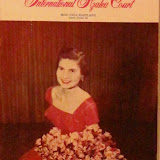
This year, as The Azalea Festival becomes NATO fest, we thought we’d take a moment to reach into our archives and have a look back at the tradition of crowning Queen Azalea in Norfolk. The crowing of Queen Azalea was retired in 2009 and replaced with the new tradition of naming a Festival Ambassador, an honored armed forces service member - male or female – to represent their country to NATO and to the world. Representatives from member nations, the armed forces and the Hampton Roads community participated in the Annual Parade of Nations last week, at which the chosen Ambassador, French Air Force Captain Geraldine Ribereau was honored. Past Queens from the United States include Hollywood Actress Patricia Anne Priest (1954) – the first Queen, Lynda Bird Johnson (1961) and Luci Baines Johnson (1965), Tricia Nixon (1969), Jennie Elizabeth Eisenhower (1997), Jennifer Robb (2003) and many more. Please enjoy these photos of Queens past and some of the ladies of their courts. Want more? Stop by the Jean Outland Chrysler Library and have a look at several full-color brochures from the 1950s and 60s celebrating The International Azalea Festival and The Azalea Court as well as military life and tourism in Norfolk.


Azalea Festival

Friday, April 9, 2010

Picture this...

Have you seen Dawoud Bey’s Class Pictures? Bey’s provocative exhibition got us thinking about the history and many types of portraiture. This extremely personal style, often used as commentary on identity, has interested artists and art lovers alike throughout history. Interested? Please stop by the Jean Outland Chrysler Library and have a look at a sampling of our volumes about portraiture and portrait artists.

Friday, March 26, 2010

Item of The Week


Only 19 years old, Rosa Bonheur made her first entry into the Paris Salon of 1841 with “Rabbits Nibbling Carrots.” Her handling of light, color, balance and texture were well beyond her years. In that same year, Bonheur began to show and sell her bronze animals, which became wildly popular. This was the beginning of a long and full career. Bonheur worked steadily until her death in 1899. Her drawings, paintings and bronzes remain popular – particularly those of animals.

Do you know a child who loves animals and art? We’ve got a book for them! Portraits of Women Artists for Children: Rosa Bonheur is a full picture of the life of the artist in a shorter form. The book is full of surprises and fun trivia. Did you know that the Bonheur family kept a sheep in a 6th-floor apartment? Did you know that Rosa Bonheur painted publicity photos for Buffalo Bill? Please stop by the Jean Outland Chrysler Library and check out our new collection of children’s books!

By Library Assistant Sara Mason

Friday, March 5, 2010

Item of the Week: “To Imagine a Language is to Imagine a Form of Life”


We're getting ready for Women of the Chrysler: A 400-Year Celebration of the Arts, part of Minds Wide Open: A Statewide Celebration of Women in the Arts in Virginia.  The exhibition opens March 24, 2010 and will feature an amazing variety of artwork by women artists drawn from the Chrysler Museum Collection. In the Library you'll find books and other resources about each artist included in the exhibition.  Spring Library Intern Victoria M. Schwab was inspired by one of the works in the show  - Deborah Butterfield's 2000 peice Kakiwi to write the following about one of the volumes featured in the reading room:  Horses: the Art of Deborah Butterfield.  Victoria writes:
"Deborah Butterfield’s work establishes a language with another species through her ability to understand and communicate with the horse. When constructing her sculptures she relies on her memory of the horse’s internal gestures and energy rather than a mere copy. Butterfield compares the process to learning how to dance with someone who cannot talk to you.

Butterfield claims art is meant to advance human beings and that a single work is the “debris from thinking and growing.” She specifically believes that art is geared to confront the viewer with what may initially appear uncomfortable through a vulnerable and complex position. Through her expression of language, growth and perception are made achievable in the physical presence of her sculptures. The viewer is asked to climb into and connect with the shape, which offers a view of the world through another set of eyes. The transference of oneself into the form allows the viewer to bring their unique life experiences to the work of art, meanwhile perceiving the remnants of Butterfields’s energy. The wonderful result is that the viewer utilizes what makes them unique from the next person and grows from the experience; one that begins with yourself and then working outward."

By: Victoria M. Schwab

Derived from the 1988 interview with Marcia Tucker

More information about Women of the Chrysler  will soon be available here, or your can learn about other events taking place as part of Minds Wide Open here.

Friday, February 26, 2010

The JOCL Celebrates the 2010 Winter Games

Here at the Jean Outland Chrysler Library, we’ve recently discovered that we have many books on Olympics and sporting, just in time for the 2010 games. One by Kennedy Graphics shows Olympic posters of 1976 by the likes of Romare Bearden, Gene Davis, Lee Krasner and Alex Katz. Another gives the history of the Olympic Games and artistic representations of Olympic events both historic and modern. If you are in the sporting spirit in these last few days of the 2010 Games, please stop by the JOCL and check out our resources. They’re worthy of a gold medal!

Friday, February 5, 2010

Item of the Week: The Snow Show

If you’re in downtown Norfolk, you might have noticed a quick snow shower passing through this afternoon. After last weekend’s snow storm, our Hampton Roads readers might be ready for warmer weather, but here in the Library we’ve enjoyed looking out the reading room windows at a fresh white blanket of snow. It’s a little inspiring, like a blank canvas or a new sheet of drawing paper. Around Ghent a number of well-dressed snowmen and impressively large snow forts attested to the inspirational power of snow as a medium. This week’s item of the week The Snow Show reveals the both the amazing results and nuanced challenges of sculpting with snow on a massive scale. Curated by Lance Fung, The Snow Show paired thirty-four international artists and architects and challenged to collaborate on a works of art built from the snow and ice of Lapland in winter. The resulting works were unique, ephemeral and massive. This catalogue brings together dramatic images of the completed works with detailed descriptions of the process of collaboration and construction that went into their creation. So if this weekend’s weather doesn’t have you pining for spring, stop by the Library and take a look at The Snow Show.      
You  might just find yourself hoping for another passing snow shower.

Friday, January 29, 2010

Item of the Week: The Norfolk Mace - January 27, 1926


If you’ve visited the Museum on a weekday morning, there’s a good chance that you encountered a school group on tour. Guided by able docents, children of all ages regularly fill the galleries with the hum of excited young voices. One stop on some school tours is the Norfolk Mace, an impressive historic item that many visitors remember long after their first visit to the Chrysler Museum. Recently, while doing some research in the archives, we came across this image from January 27, 1926 when “Children’s Day” brought record numbers of parents, teachers and children to an exhibition at the then Norfolk Art Museum. Note the two Norfolk Police Officers watching over the Mace. As a February 23, 1926 letter [below] from City Manager I. Walke Truxton reveals, at this time, the Mace was stored in a vault at the Norfolk National Bank. Whenever it left the bank police guard was required to go with it. Eighty-four years later, school children are still visiting the Mace here at the Museum. You can find more information about the Norfolk Mace here or by stopping by the Library.

Friday, December 11, 2009

Item of the Week: Art in the Making

Ever wonder about the artist’s process behind Degas’ Dancer with Bouquets or just how artists such as Manet, Monet, and Renoir worked? This week’s featured items may answer your questions. The Library recently acquired three DVDs from the National Gallery, London’s wonderful series Art in the Making including “Degas,” “Impressionism,” and “Italian Painting Before 1400.” Each film delves into the materials and techniques used to create a selection of works. Drawing on tools often used in the conservation of paintings, such as infrared and X-ray photography Art in the Making provides a unique view of each work from the canvas up, so to speak. Each disk also comes with a bonus film that looks at a broader range of work. For example, Art in the Making: Degas is paired with Degas: Beyond Impressionism, a short film that features the later work of Degas and its impact on twentieth – century painters like Picasso.


Interested? Like all of our videos and DVDs, the Art in the Making series DVDS may be checked out by Museum Members or watched in the Library. Stop by take a look .


Friday, November 27, 2009

Item of the Week: Egypt Delineated


         In 1798 Napoleon Bonaparte invaded Egypt in an ambitious attempt to upset the balance of power in central Asia. While Napoleon’s soldiers went about the business of conquering and occupying Egypt, another small army of artists and scientists – called the Commission of the Sciences and Arts documented its antiquities, history and culture. Among them was Vivant Denon, a talented painter and engraver and an enthusiastic antiquarian. Sometimes called the first Egyptologist, Denon not only explored, sketched and described Egypt’s ancient monuments but also documented Egyptian life and culture at the end of the 18th century. Denon’s engaging work became part of the Description de l’Egypt, one product of the Commission of the Science and Arts, but he also published two volumes relating his personal experiences.

One of these, Egypt Delineated enjoyed great success and was reprinted in numerous languages. The Library is lucky to have an English edition of Egypt Delineated published in London in 1819. This large folio edition describes itself as “The celebrated work detailing the expedition of the French” and contains engravings “exhibiting the scenery, antiquities, architecture, hieroglyphics, costume, inhabitants, animals, etc” of Egypt. Denon’s engravings provided a wealth of information for the first generation of French and British Egyptologists, helped to inspire the use of Egyptian motifs in art, literature, architecture, fashion, and décor and also guaranteed a place in 19th century popular culture for a romanticized image of Ancient Egypt.

If a visit To Live Forever: Egyptian Treasures from the Brooklyn Museum has you dreaming of elaborate temples and tombs encircled by wind-swept desert landscapes, stop by the Library and ask to take a look at this monumental volume that helped to reintroduce Egypt to the European imagination.

Friday, October 30, 2009

Celebrating American Archives Month: At Home and Abroad


Every family keeps records: birth certificates, deeds to land, and of course, passports. This particular passport, signed July 8, 1810 is special. It would have kept Jean Jacques Andre and his wife Suzanne out of prison as they left Norfolk and traveled to France in the middle of the American embargo against France. Suspicious that the United States was turning a profit from shipping goods from French colonies, Napoleon ordered the seizure of all American ships in European ports in 1806. By 1809, the United States Non-Intercourse Act stated that any French or British ships entering U.S. waters were to be seized. In 1810, the year stamped on the Andre’s passport, fears of war between the United States and France ran rampant. Tensions ran high between the two powers, making it difficult to travel by sea, and even more difficult to be a Frenchman traveling on an American ship. The trade disputes were eventually settled by the creation of tariffs and proper documentation for items shipped overseas. Proper travel documentation and regulations for people and cargo remain an important part our lives to this day. Unlike the passports of today, however, photographs were not available at this time for easy identification. Instead this passport features a description by the issuing agent, providing an interesting look at what he may have looked like.  Interested in finding out more? Stop by the Library and take a look!