Showing posts with label Local History. Show all posts

Friday, April 15, 2011

Update - What's New at the Library


Garden Bulbs In Color SB425 .M25 1938
 Spring has sprung at the Chrysler! Lovely tulips have blossomed in both the Memorial Garden and Mary’s Garden. The galleries are also blooming with color – whether it’s the amazing watercolors of James Tissot: The Life of Christ or the brilliant flowers of Tiffany Lamps:Articles of Utility, Objects of Art. In the Library, too, all sorts of new things are springing up. It’s been awhile since we’ve had a Library update, so here are a few of the many things that are new:

New look –
You may have noticed - the blog looks a little different. After a brief hiatus we’re back with an updated look and some new features. You may enjoy checking out a changing selection of recently researched items, or linking our posts to your Facebook or Twitter page. You can also sign up to receive an email whenever the blog is updated.    We hope you like the changes – please tell us what you think.


New faces –
On April 6 we welcomed Special Project Librarian Chelsea DeAngio to the Library Staff. Chelsea is already hard at work making new materials available to Library patrons and helping with reference requests. She’s great! If you haven’t already, stop by and say hello.

The Museum also welcomed a new curator, Amy Brandt, in March. Amy is the new McKinnon Curator of Modern and Contemporary Art, and has been hard a work researching the collection. She’s already helped us build the Library’s collection of books about contemporary art with some much needed additions. You can read more about Amy here. We’re glad to be working with her.

New information -
Everywhere you look in the galleries, there something new and different to look at - new exhibitions, new collections, and new works of art. We’ve been keeping pace in the Library. You’ll find information about all of the current exhibitions on hand in the reading room, along with a number of newly acquired books.

Old and interesting
If you’ve already visited the James Tissot: The Life of Christ exhibition you may be interested in taking a look at our 1903 New York edition of the completed illustrated Bible for which the watercolors were produced. The three volume set is on view in the reading room.

We’re also featuring new items from the Library’s “hidden” collections in the reading room display case. Along with The Civil War: Visual Perspectives, Then and Now exhibition on view in the Waitzer Community Gallery – a challenging look at the meaning and impact of the War on American history and culture from a variety of perspectives - you can see some intriguing archival materials relating to the Civil War in Hampton Roads from the Library’s collection and start a conversation with voices from the past.

I hope to see you in the Library again soon!

 - L.C.

Friday, October 29, 2010

Archives Month - A Bump on the Head


Pirates and phrenology? Yes. That’s right. In 1827 John Myers, who was Inspector of Customs for Norfolk at the time, received an odd question about the skull of a pirate from his friend Joshua Cohen. Apparently there was a desire for the skull for “phrenological appreciation at Baltimore” by a Dr. Archer. Did Dr. Archer wish to derive meaning from bumps on the bones of the Pirate Tardy? Popular science at the time postulated a relationship between a person’s character and the morphology or shape of the human skull. This study became all the rage, and was used in society at the time to explain misfortunes, predict the future, diagnose maladies, etc. Dr. Archer probably would have wanted to inspect the skull of a pirate in order to determine the malformation that sparked his life of crime.

It was the job of John Myers to say whether or not it was in his jurisdiction to allow this piece of a pirate, buried in the sand at Old Point, to leave the state of Virginia. We’ve had some challenging research questions here at the Jean Outland Chrysler library, but we’re willing to bet that this one had John scratching his own noggin. Interest in the human head has waned little in the last almost two centuries. The use of the skull in art has sky rocketed in the last few years – think of Damien Hirst’s diamond encrusted skull. Do you have a mind for some phrenological explorations of your own? Stop by the JOCL this Fall and glance through such popular titles as Wonder and Horror of the Human Head and Ghost in the Shell. We also have a copy of George Combe’s The Constitution of a Man - one of the most popular works on phrenology.
Just thought we’d give you a heads up.

- SCM
Here's the original 1827 letter from the Myers Collection. Click on the Image for a better view!

Friday, September 17, 2010

International Talk Like a Pirate Day 2010

‘Tis once again the magical time of year when we throw grammar and diction, manners and class aside in order to bring you International Talk Like a Pirate Day http://www.talklikeapirate.com/piratehome.html. Yo-ho, me hearties! It is in this spirit that we here at the Jean Outland Chrysler Library (an aaarrrrrrt library, you know), with the help of the Myers Family papers, bring you the “Pirates Rules for Civilized Living.”

To all of you career pirates out there – Just because Whistler was interested in The Gentle Art of Making Enemies doesn’t mean that you have to be. Here are a few rules for playing well with others and not interrupting international trade this holiday based on actual incidences of piracy that effected the shipping trade of the Myers family.

1- It is not polite to attach a ship and steal someone else’s cargo of $222.86 dollars in sugar. Do you have any idea how much that was in 1822?

2- It is unkind to abscond with a ship carrying mail – particularly that containing good gossip all the way from Richmond. Now what will we read for fun?

3- If you attempt to highjack a schooner off Pensacola, please leave the coffee aboard. We’re dreadfully tired of tea.

Well, me Matey? Do you feel better prepared to celebrate in higher class and style this year? Need a refresher course in pirate manners and 19th century Norfolk society? Stop by the JOCL and ask us about the Myers papers. Mind your pirate Ps and Qs, and make September 19, 2010 arrrrrguably the most polite International Talk Like a Pirate Day ever!

- SCM

Friday, September 3, 2010

Item of the week: the September 3 storm

John Myers Sept. 4, 1821 letter to his brother Sam
It looks like Hurricane Earl has blown by Norfolk, luckily without much damage. The round the clock coverage of approaching storms we enjoy today gives us ample time to prepare for storms – a luxury previous generations of Norfolk residents didn’t have. A pair of letters from the Myers Family papers reveal the surprise and terror they felt in the wake of devastating weather. On September 3, 1821 a powerful storm, probably a Category 2 or 3 hurricane on today’s Saffir – Simpson scale hit Hampton Roads. On September 4 John Myers wrote his brother Samuel Myers in Richmond:


We have an awful tempest – the damage done is great – the extent not ascertained – sufferers many – some severe – the papers give you a hazy & imperfect sketch. It is a scene that could not be described without detailing a thousand minutia - you must see it to believe – we have not a tree, shrub or fence standing ... I do not know what is the loss in expense to the Richmond Boats – They are both high and dry in a cornfield, about ten miles above the eastern Sandbridge – when & how to be got off I know not.”

On September 5, John wrote again in greater detail, adding:

Our dwelling stands & all are safe & well within – but every tree & fence & shrub around are leveled – Our drawbridge struck ground & the Lothair (a ship) is in a cornfield not to be gotten off … I would not repair the damage to the town for 200 million dollars - it is a scene of devastation – Chamberlain is a considerable sufferer – His brig sunk – I must refer you more particularly to the papers – The Richmond & Petersburg are in a cornfield ten miles above the Eastern Bridge, how and when to be got off is conjecture – heavy expense at least. Disease & death , which surround us, has no terror like the fury of the tempest...”

The Hurricane, which went on to be the last Hurricane to directly strike New York City continued up the coast, leaving destruction in its wake. Disease often followed a storm, and in 1821 Norfolk was struck by a yellow fever epidemic which increased the toll on the  already suffering city.

If you’d like to learn more about the Myers family, stop by the Library or visit the Moses Myers House.

Friday, May 7, 2010

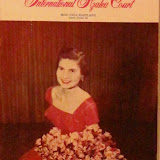
This year, as The Azalea Festival becomes NATO fest, we thought we’d take a moment to reach into our archives and have a look back at the tradition of crowning Queen Azalea in Norfolk. The crowing of Queen Azalea was retired in 2009 and replaced with the new tradition of naming a Festival Ambassador, an honored armed forces service member - male or female – to represent their country to NATO and to the world. Representatives from member nations, the armed forces and the Hampton Roads community participated in the Annual Parade of Nations last week, at which the chosen Ambassador, French Air Force Captain Geraldine Ribereau was honored. Past Queens from the United States include Hollywood Actress Patricia Anne Priest (1954) – the first Queen, Lynda Bird Johnson (1961) and Luci Baines Johnson (1965), Tricia Nixon (1969), Jennie Elizabeth Eisenhower (1997), Jennifer Robb (2003) and many more. Please enjoy these photos of Queens past and some of the ladies of their courts. Want more? Stop by the Jean Outland Chrysler Library and have a look at several full-color brochures from the 1950s and 60s celebrating The International Azalea Festival and The Azalea Court as well as military life and tourism in Norfolk.


Azalea Festival

Friday, April 30, 2010

Women at the Chrysler : Making Beautiful Music

During the exhibition Women of the Chrysler: A 400-Year Celebration of the Arts, we’re celebrating the contributions of women to the history of the Chrysler Museum. Women from all backgrounds have played an integral role in the creation, development, and operation of the Museum from its very beginning. Each week during the exhibition, we’re a story about a woman or group of women accompanied by an online album of images from the Library's collections. We also invite you to join us in the Library to learn more about these dedicated women.


From the days of Norfolk Museum of Arts and Sciences musicales to modern musical performances such as Art Riff and The Art of Jazz, music has always been a large part of life at the Chrysler. This week we've created a slide show of just a few of the many talented women who have filled the galleries and grounds of the Museum with beautiful music. Please help us continue to celebrate women in art and music by joining us for a performance by Bellisima!, the South Hampton Roads auditioned ensemble performing music written specifically for the voices of women. Bellisima! will make beautiful music on Sunday, May 9 at 2pm in Huber Court.

Friday, April 16, 2010

Women at the Chrysler: The Galleries in Bloom

During the exhibition Women of the Chrysler: A 400-Year Celebration of the Arts, we’re celebrating the contributions of women to the history of the Chrysler Museum. Women from all backgrounds have played an integral role in the creation, development, and operation of the Museum from its very beginning. Each week during the exhibition, we’re a story about a woman or group of women accompanied by an online album of images from the Library's collections. We also invite you to join us in the Library to learn more about these dedicated women.
Outside the temperatures are rising and the spring flowers are in full bloom. It's the perfect time to enjoy a lovely walk outside in one of the Museum's two gardens. The beautiful blooms also reminded us of one wonderful feature of the Chrysler. Every week and at every event we enjoy beautiful flowers, artfully arranged in the galleries.  This week's album features the dedicated ladies (and gentlemen) who have worked throughout the years to keep the gardens and galleries of the Museum beautiful with blooms.

Women At the Chrysler -All A Bloom

Friday, April 2, 2010

Women At the Chrysler: Annie Wood - Author

During the exhibition Women of the Chrysler: A 400-Year Celebration of the Arts, we’re celebrating the contributions of women to the history of the Chrysler Museum. Women from all backgrounds have played an integral role in the creation, development, and operation of the Museum from its very beginning. Each week during the exhibition, we’re a story about a woman or group of women accompanied by an online album of images from the Library's collections. We also invite you to join us in the Library to learn more about these dedicated women.

This week we thought we’d share an interesting aspect of a well-known figure in the Museum’s history. If you are a regular Museum visitor or a Norfolk native, chances are you’ve heard of Irene Leach and Anna Cogswell Wood) and their contributions to the establishment of an Art Museum in Norfolk. (If you haven’t stop by the Library and take a look at our
Women at the Chrysler exhibit to learn all about it.) What you may not know, however, is that Annie Wood was also a prolific writer, authoring and co-authoring numerous works of fiction and non-fiction. Beginning in 1891 with the novel Diana Fontaine written under the nom de plume Algernon Ridgewood (taken from Wood’s Father’s name) Wood followed this work with the 1892 novel Westover’s Ward. Over the next forty-nine years, she published five other works of non-fiction and essays on topics ranging from her travels in Europe to parlor dramatics to criminal psychology. Wood also tirelessly compiled albums of her thoughts and ideas in beautifully leather bound books she called her “pensées”. Many of these were donated after her death to the Norfolk Museum of Arts and Science and remain in the collections of the Chrysler Museum and the Irene Leache Memorial Foundation. In the attached slide show you’ll find images of works by and about Wood. If you’d like to learn more, we urge you to stop by the Library or to read Jo Ann Mervis Hofheimer’s 1996 biography Annie Wood: a  Portrait.

Westover’s Ward is also available through Google Books.

L.C.


Friday, March 12, 2010

The Jean Outland Chrysler Library Collection: in Concert this Sunday

Music of Quality and Taste: Selections from the Myers Music Collection

If you are a regular blog reader, you may remember us mentioning the Myers Family Music collection. This impressive library of over 900 pieces of music from the 18th and 19th centuries is a treasure of beautiful music tucked away in our collection. Some of these pieces are little known and rarely heard today. This Sunday, March 14, 2010 the Friends of Historic Houses present Music of Quality and Taste: Selections from the Myers Music Collection. The Virginia Chorale will perform choral and instrumental selections from the collection on  instruments like those the Myers would have used.  Don’t miss this rare opportunity to enter the musical world of the early 1800s in the comfort of the Museum’s Kaufman Theatre. The concert starts at 3 p.m. It’s free for Friends of the Historic Houses, $5 for Museum Members, $10 for all others. For ticket information, please call (757) 333-1087.


We hope to see you there!

Friday, January 29, 2010

Item of the Week: The Norfolk Mace - January 27, 1926


If you’ve visited the Museum on a weekday morning, there’s a good chance that you encountered a school group on tour. Guided by able docents, children of all ages regularly fill the galleries with the hum of excited young voices. One stop on some school tours is the Norfolk Mace, an impressive historic item that many visitors remember long after their first visit to the Chrysler Museum. Recently, while doing some research in the archives, we came across this image from January 27, 1926 when “Children’s Day” brought record numbers of parents, teachers and children to an exhibition at the then Norfolk Art Museum. Note the two Norfolk Police Officers watching over the Mace. As a February 23, 1926 letter [below] from City Manager I. Walke Truxton reveals, at this time, the Mace was stored in a vault at the Norfolk National Bank. Whenever it left the bank police guard was required to go with it. Eighty-four years later, school children are still visiting the Mace here at the Museum. You can find more information about the Norfolk Mace here or by stopping by the Library.

Thursday, December 24, 2009

Season’s Greetings from the Jean Outland Chrysler Library


It seems like such a small thing, but I find it thrilling to unlock my apartment’s shiny brass mailbox to find a stack of brightly-enveloped holiday cards. Every year, I await their arrival with child-like anticipation. I excitedly check the postmark and return address, then gently peal back the adhesive flap. (Be careful. There may be glitter inside!) I relish the words in ink biting into the paper, the photos tucked inside of younger cousins who are no longer small, the holiday letters telling of loved ones’ joys and sorrows. If there happens to be a gift card from Target tucked inside by a far-away aunt, well, that’s just a bonus. The real joy in these small paper and paste wonders is that someone, somewhere intentionally chose, purchased, inscribed and mailed this lovely remembrance to me. They thought of me, just as I think of the people who have touched my life over the last year as I fill out my holiday cards. With a quiet smile, I pin these magical mementos to a card display wreath, hand-made by a friend years ago, and bustle off to make a cup of cocoa. ‘Tis the season to be jolly.

Since the production of the first commercial Christmas card by Sir Henry Cole in 1843 London, they have been a staple of Christian and non-Christian celebrations alike during this festive time. The archival collection of the Jean Outland Chrysler Library contains many holiday cards to and from people all over Hampton Roads, including the Chryslers. If you’re in the mood for a burst of holiday cheer, please stop by and have a look. We wish you a bright and happy holiday season.

Library Assistant Sara Mason

Friday, October 30, 2009

Celebrating American Archives Month: At Home and Abroad


Every family keeps records: birth certificates, deeds to land, and of course, passports. This particular passport, signed July 8, 1810 is special. It would have kept Jean Jacques Andre and his wife Suzanne out of prison as they left Norfolk and traveled to France in the middle of the American embargo against France. Suspicious that the United States was turning a profit from shipping goods from French colonies, Napoleon ordered the seizure of all American ships in European ports in 1806. By 1809, the United States Non-Intercourse Act stated that any French or British ships entering U.S. waters were to be seized. In 1810, the year stamped on the Andre’s passport, fears of war between the United States and France ran rampant. Tensions ran high between the two powers, making it difficult to travel by sea, and even more difficult to be a Frenchman traveling on an American ship. The trade disputes were eventually settled by the creation of tariffs and proper documentation for items shipped overseas. Proper travel documentation and regulations for people and cargo remain an important part our lives to this day. Unlike the passports of today, however, photographs were not available at this time for easy identification. Instead this passport features a description by the issuing agent, providing an interesting look at what he may have looked like.  Interested in finding out more? Stop by the Library and take a look!

Friday, October 16, 2009

Celebrating Archives Month: Hampton Roads Stories from Our Collections

October is American Archives Month. To celebrate, we thought we would share some of the stories told by items in the archival collections of the Jean Outland Chrysler Library. Each week in October we'll be featuring a story from our archives that reveals part of Hampton Roads history. Feeling a little under the weather? This week’s item might help.


Feeling a little under the weather? We’ve got a remedy for you – a home remedy from the eighteenth century. It’s a little worse for wear, but we can still read most of the ingredients for these homemade pills. You take half an ounce of rhubarb, half an ounce of an ingredient lost to time, mix both with soap and roll into pea sized pills. Add a little honey (to help it go down) and hope for the best. What ailment was this prescription for? Unfortunately (or, perhaps fortunately), this document is very discreet, but we do know that rhubarb was used as a cure for various stomach troubles. This document hails from a time when home remedies were relied on for everyday ills. If a home remedy didn't appeal to you, there were other options. By 1882, people in Norfolk could also elect to head to K. Cook’s Hair Dressing Saloon where particular attention, as this advertising card notes, was paid not only to the dressing of Women and Children’s hair, but also to “cupping and leeching. ”

As for me, I think I’ll stick to the rhubarb…


Friday, October 2, 2009

Celebrating Archives Month: Hampton Roads Stories from Our Collections

October is American Archives Month. To celebrate,we thought we would share some of the stories told by items in the archival collections of the Jean Outland Chrysler Library. Each week in October we'll be featuring a story from our archives that reveals part of Hampton Roads history.  This week it's the story of a well known (at the time) visitor to our area.

Born in 1868 into infamous wealth as the eldest daughter of New York financier and railroad magnate Jay Gould, Helen Miller Gould (later Helen Miller Shepard) spent her life in philanthropic efforts. Though “Miss Gould” focused on the education of children and the lifting of the less fortunate on the grounds of her home, Lyndhurst, her real love was the Young Men’s Christian Association. She traveled almost yearly on inspection tours of Y.M.C.A.s all over the country. Known for her patriotism and war-relief efforts which began during the Spanish-American War, she gave freely of her time. Miss Gould gave talks, joined in Bible studies and was a general inspiration. She also gave of herself financially, spending millions of dollars to build new facilities and libraries for soldiers and railway men who made use of the organization for social and academic enrichment.

Miss Gould made several visits to Norfolk. She presented a building to troops at Old Point Comfort in the early 1900s and returned for visits and Y.M.C.A. inspections over the years. She gave talks, participated in Bible studies, and encouraged the servicemen in any way possible. In the archives, the Jean Outland Chrysler Library holds images from one of these visits [pictured below].The young men in uniform listen respectfully, presumably to Miss Gould, on one of her visits to the Norfolk Naval Y.M.C.A. The local ladies pause in their conversation with Miss Gould for a photo with the lady of the hour. Want to learn more about Miss Gould's visit to Norfok or other Hampton Roads Stories?  Stop by the Library! 


Friday, September 4, 2009

Intern Projects - Moving the Myers Library


This summer, we asked the Library interns to write a short paragraph about their favorite assignment this summer. Imagine our suprise when three of four chose to write about the dirtiest, most difficult task they were given - moving the Myers Library. Here is what Gabrielle Barr, Emma Tisdale and Jessica Dame had to say about this unique assignment.

Gabrielle Barr :Tying Up Loose Ends


"Green with Gold. Swirling purple and blue paper. Diamond embossed leather. With the many damaged books in the Myers’ Collection, it was the interns’ task to mend and help preserve these deteriorating volumes. I enjoyed matching covers to works which involved analysis of the book’s size, the color of its remaining cover, and identification of designs on the spine and inside the piece. If both covers were missing, it was necessary to observe the way the pages had laid on the leather. Then I tied linen tape around the volumes to keep them intact until they can be enclosed. The most rewarding aspect of this project was when I was able to unite missing pages with the books such as with Moliere’s plays. These pages often bestowed useful and interesting information about the book as well, giving the name of the author, date, title, and publisher. While I loved the detective and detail oriented nature of the assignment, I relished the opportunity to handle these old works. A drawing of a horse, algebra problems scribbled in pencil and little notes demonstrate the personal quality of books that allow viewers to gain an understanding of the individuals. The Myers’ library encompasses such a range of eras, genres, and authors that reveals a part of each member of the family. "

Emma Tisdale: My Favorite Project

"Before my summer at the Chrysler Museum, I truly had no comprehension of the amount of work a librarian has to face each day. From the numerous long term projects to the preservation of the collection, the tasks that the librarians at the museum have to address are much more than I ever thought existed. I had the chance as an intern to tackle a small part of many of these difficult tasks. My favorite project, however, left me scrubbing smudges off my fingers and sneezing book-rot for days. It involved moving the ever-aging Myers Library from the back corner of the library to the front of the stacks. It took patience and focus, as the books were very delicate to handle and extremely disorganized on their shelves. My fellow interns and I took a new inventory of the collection of books and moved them in chronological order. The project took over a week to finish, but it left me with a sense that I had actually done something to help the library and that Laura could now check one of the many projects off her to-do list. "


Jessica Dame - Favorite Project

"Over the summer, I got the chance to intern for the library and obtain school credits and gain great hands on experience. Of all the projects in the library this summer, my favorite was getting to work with the Moses Meyer book collection. It was fun to look at books from the 1700s through the 1950s and see what a wealthy local family was reading in that time period. I came across books and authors I have heard of or read and got to see science books that had very bad information in them that have long since been changed in today’s books. I had to wear gloves and handle the books with care because I was literally handling history. Somehow when you have to put on gloves for a project, it feels more important and reminded me of professions that require gloves, like doctors, scientists and historians in general.
It also felt like I helped accomplish something big and I got to see an end result. The books were relocated and put in order by year. What began as a bit of a mess came together and now looks neat and organized. "

Friday, May 1, 2009

Item of the Week: Class of 1897 Photograph

May, for many means graduation ceremonies. As students around Hampton Roads don mortar boards and graduation robes, we thought we’d highlight an item from the Jean Outland Chrysler Library’s collections that gives us a peek at commencements past. This photograph of the poised and beruffled Class of 1897 comes from a scrapbook in our Rare Book collection. Donated in the late 1940s by alumnae of the Norfolk College for Young Ladies this unique album collects photographs of class presidents and materials from each commencement ceremony at the school between 1882 and 1899. Class photos are also included of several senior classes between 1887 and 1899. The Norfolk College for Young Ladies was founded in 1880 as a private boarding school for women. The school stood in the area of Norfolk that today is known as College Place, and in fact, gave this area its name. Courses in everything from calisthenics to latin offered increased educational opportunities for women in Norfolk at a time when few options were open to them. With the expansion and improvement of public education for women, however, the Norfolk College for Young Ladies experienced financial difficulties, closing in 1899. The Alumnae of the school continued to support women’s education in Norfolk for many decades, offering scholarships to William and Mary and Randolph-Macon.

While on the subject of graduations, we’d like to extend congratulations to all of the graduating students who we have worked with in the Library this year. Particular felicitations are due to Library Assistant Sara Mason, who will graduate May 9 from Old Dominion University with a B.A. in English.

Friday, March 20, 2009

Norfolk’s Love of Flowers


Though primarily known for the art reference collection, the Jean Outland Museum Library is a wonderful source for local Norfolk history. The archives contain city information from various agencies, including the city council, chamber of commerce and merchants association. The combination of these agencies exhibits a comprehensive view of Norfolk from the late nineteenth century until today. One common theme that emerges from the Chrysler archives is Norfolk’s residents’ preoccupation with gardening. Azaleas and camellias have been the historical favorites of green-thumbs all over the Tidewater region; the Norfolk Botanical Garden was once called “Azalea Gardens.” The American Camellia Society held its national meeting in Norfolk in 1952, and the two-day event culminated with the Norfolk Camellia Show. A coup for both Norfolk and Virginia Beach (the Cavalier Hotel was official convention lodgings); this three thousand-member society brought tourism revenue into Tidewater and raised the profile of Norfolk as a horticulturists’ dream. The event’s program attempted to dispel any reservations attendees would have about celebrating these delicate flowers in Virginia’s harsh conditions, stating “An analysis of our climate and soil reveals, however, not only is it adequate to the growth of camellias, but nears the ideal for their development.” Norfolk was thereby thought of as a gardening paradise, and continued to host various horticultural events. Historic Garden Week in Virginia, a celebration of Tidewater’s most notable gardens is now in its seventy-six year, and will be held from April 18-25, 2009.
- Meagan Jones, Library Intern