Showing posts with label Norfolk; Visitors. Show all posts

Friday, May 13, 2011

Picture from our past: Famous visitors to the Chrysler


Recognize this famous face?  It's Friday the 13th, and whether or not you suffer from Triskaidekaphobia you're likely to know this famous actor and art collector from one of his films.  In 1979,  Vincent Price visited the Chrysler Museum and posed with Bernini's Bust of the Savior (71.2043 ).  

Price is perhaps best known for his roles in horror films such as House of Wax (1953)  and  House on Haunted Hill (1959). He also starred in numerous radio shows including The Saint (1944-1951) on NBC radio.  You might also know him from  Edward Scissorhands (1990), or from voice work on Micheal Jackson's Thriller (1982).

What you may not know, however, is that he was also an avid art collector.  From 1962 to 1971, Sears Roebuck  offered the "Vincent Price Collection of Fine Art", to the general public. Around 50,000 works of art were eventually sold through the collection. Price's personal art collection, along with works collected by his wife Mary, became the core of the Vincent Price Art Museum at East Los Angeles College in California. 

Price's visit to the Chrysler Museum was purely for pleasure. You too can enjoy  Bernini's Bust of the Savior - it's currently on view in our Renaissance and Baroque Galleries (Gallery 218).  Happy Friday the 13th!

Friday, October 29, 2010

Archives Month - A Bump on the Head


Pirates and phrenology? Yes. That’s right. In 1827 John Myers, who was Inspector of Customs for Norfolk at the time, received an odd question about the skull of a pirate from his friend Joshua Cohen. Apparently there was a desire for the skull for “phrenological appreciation at Baltimore” by a Dr. Archer. Did Dr. Archer wish to derive meaning from bumps on the bones of the Pirate Tardy? Popular science at the time postulated a relationship between a person’s character and the morphology or shape of the human skull. This study became all the rage, and was used in society at the time to explain misfortunes, predict the future, diagnose maladies, etc. Dr. Archer probably would have wanted to inspect the skull of a pirate in order to determine the malformation that sparked his life of crime.

It was the job of John Myers to say whether or not it was in his jurisdiction to allow this piece of a pirate, buried in the sand at Old Point, to leave the state of Virginia. We’ve had some challenging research questions here at the Jean Outland Chrysler library, but we’re willing to bet that this one had John scratching his own noggin. Interest in the human head has waned little in the last almost two centuries. The use of the skull in art has sky rocketed in the last few years – think of Damien Hirst’s diamond encrusted skull. Do you have a mind for some phrenological explorations of your own? Stop by the JOCL this Fall and glance through such popular titles as Wonder and Horror of the Human Head and Ghost in the Shell. We also have a copy of George Combe’s The Constitution of a Man - one of the most popular works on phrenology.
Just thought we’d give you a heads up.

- SCM
Here's the original 1827 letter from the Myers Collection. Click on the Image for a better view!

Friday, September 3, 2010

Item of the week: the September 3 storm

John Myers Sept. 4, 1821 letter to his brother Sam
It looks like Hurricane Earl has blown by Norfolk, luckily without much damage. The round the clock coverage of approaching storms we enjoy today gives us ample time to prepare for storms – a luxury previous generations of Norfolk residents didn’t have. A pair of letters from the Myers Family papers reveal the surprise and terror they felt in the wake of devastating weather. On September 3, 1821 a powerful storm, probably a Category 2 or 3 hurricane on today’s Saffir – Simpson scale hit Hampton Roads. On September 4 John Myers wrote his brother Samuel Myers in Richmond:


“We have an awful tempest – the damage done is great – the extent not ascertained – sufferers many – some severe – the papers give you a hazy & imperfect sketch. It is a scene that could not be described without detailing a thousand minutia - you must see it to believe – we have not a tree, shrub or fence standing ... I do not know what is the loss in expense to the Richmond Boats – They are both high and dry in a cornfield, about ten miles above the eastern Sandbridge – when & how to be got off I know not.”

On September 5, John wrote again in greater detail, adding:

“Our dwelling stands & all are safe & well within – but every tree & fence & shrub around are leveled – Our drawbridge struck ground & the Lothair (a ship) is in a cornfield not to be gotten off … I would not repair the damage to the town for 200 million dollars - it is a scene of devastation – Chamberlain is a considerable sufferer – His brig sunk – I must refer you more particularly to the papers – The Richmond & Petersburg are in a cornfield ten miles above the Eastern Bridge, how and when to be got off is conjecture – heavy expense at least. Disease & death , which surround us, has no terror like the fury of the tempest...”

The Hurricane, which went on to be the last Hurricane to directly strike New York City continued up the coast, leaving destruction in its wake. Disease often followed a storm, and in 1821 Norfolk was struck by a yellow fever epidemic which increased the toll on the  already suffering city.

If you’d like to learn more about the Myers family, stop by the Library or visit the Moses Myers House.

Friday, May 7, 2010

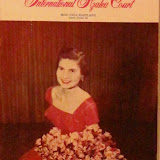
This year, as The Azalea Festival becomes NATO fest, we thought we’d take a moment to reach into our archives and have a look back at the tradition of crowning Queen Azalea in Norfolk. The crowing of Queen Azalea was retired in 2009 and replaced with the new tradition of naming a Festival Ambassador, an honored armed forces service member - male or female – to represent their country to NATO and to the world. Representatives from member nations, the armed forces and the Hampton Roads community participated in the Annual Parade of Nations last week, at which the chosen Ambassador, French Air Force Captain Geraldine Ribereau was honored. Past Queens from the United States include Hollywood Actress Patricia Anne Priest (1954) – the first Queen, Lynda Bird Johnson (1961) and Luci Baines Johnson (1965), Tricia Nixon (1969), Jennie Elizabeth Eisenhower (1997), Jennifer Robb (2003) and many more. Please enjoy these photos of Queens past and some of the ladies of their courts. Want more? Stop by the Jean Outland Chrysler Library and have a look at several full-color brochures from the 1950s and 60s celebrating The International Azalea Festival and The Azalea Court as well as military life and tourism in Norfolk.


Azalea Festival

Friday, April 30, 2010

Women at the Chrysler : Making Beautiful Music

During the exhibition Women of the Chrysler: A 400-Year Celebration of the Arts, we’re celebrating the contributions of women to the history of the Chrysler Museum. Women from all backgrounds have played an integral role in the creation, development, and operation of the Museum from its very beginning. Each week during the exhibition, we’re a story about a woman or group of women accompanied by an online album of images from the Library's collections. We also invite you to join us in the Library to learn more about these dedicated women.


From the days of Norfolk Museum of Arts and Sciences musicales to modern musical performances such as Art Riff and The Art of Jazz, music has always been a large part of life at the Chrysler. This week we've created a slide show of just a few of the many talented women who have filled the galleries and grounds of the Museum with beautiful music. Please help us continue to celebrate women in art and music by joining us for a performance by Bellisima!, the South Hampton Roads auditioned ensemble performing music written specifically for the voices of women. Bellisima! will make beautiful music on Sunday, May 9 at 2pm in Huber Court.

Friday, February 5, 2010

Item of the Week: The Snow Show

If you’re in downtown Norfolk, you might have noticed a quick snow shower passing through this afternoon. After last weekend’s snow storm, our Hampton Roads readers might be ready for warmer weather, but here in the Library we’ve enjoyed looking out the reading room windows at a fresh white blanket of snow. It’s a little inspiring, like a blank canvas or a new sheet of drawing paper. Around Ghent a number of well-dressed snowmen and impressively large snow forts attested to the inspirational power of snow as a medium. This week’s item of the week The Snow Show reveals the both the amazing results and nuanced challenges of sculpting with snow on a massive scale. Curated by Lance Fung, The Snow Show paired thirty-four international artists and architects and challenged to collaborate on a works of art built from the snow and ice of Lapland in winter. The resulting works were unique, ephemeral and massive. This catalogue brings together dramatic images of the completed works with detailed descriptions of the process of collaboration and construction that went into their creation. So if this weekend’s weather doesn’t have you pining for spring, stop by the Library and take a look at The Snow Show.      
You  might just find yourself hoping for another passing snow shower.

Friday, January 29, 2010

Item of the Week: The Norfolk Mace - January 27, 1926


If you’ve visited the Museum on a weekday morning, there’s a good chance that you encountered a school group on tour. Guided by able docents, children of all ages regularly fill the galleries with the hum of excited young voices. One stop on some school tours is the Norfolk Mace, an impressive historic item that many visitors remember long after their first visit to the Chrysler Museum. Recently, while doing some research in the archives, we came across this image from January 27, 1926 when “Children’s Day” brought record numbers of parents, teachers and children to an exhibition at the then Norfolk Art Museum. Note the two Norfolk Police Officers watching over the Mace. As a February 23, 1926 letter [below] from City Manager I. Walke Truxton reveals, at this time, the Mace was stored in a vault at the Norfolk National Bank. Whenever it left the bank police guard was required to go with it. Eighty-four years later, school children are still visiting the Mace here at the Museum. You can find more information about the Norfolk Mace here or by stopping by the Library.